Mooseum
ExploreToursBlog

Mooseum

Find museums worth the trip.

@mooseum.app on Instagram

Explore

  • Explore map
  • Museum directory
  • Museums near me
  • Museums with indoor maps
  • Free museums in Europe

Popular countries

  • United States
  • United Kingdom
  • Italy
  • Germany
  • Japan
  • France

Top museums

  • Louvre Museum
  • British Museum
  • The Met
  • Rijksmuseum
  • Museo del Prado
  • Vatican Museums

Audio tours

  • All audio tours
  • Museums with audio tours
  • Create a tour
  • Tour Studio

Mooseum

  • Why we built Mooseum
  • Blog
  • Privacy policy
  • Terms of service

Popular cities

  • London
  • Paris
  • New York
  • Amsterdam
  • Rome
  • Berlin
  • Tokyo
  • Madrid
  • Vienna
  • Florence
  • Helsinki
© 2026 MooseumPrivacy policyTerms of service
Barcelona,Spain

Museu Picasso

  • Montcada, 15-23, Ciutat Vella
    Directions(opens Google Maps in a new tab)
  • Website(opens in a new tab)
Wikipedia

About Museu Picasso

Few museums show how a great artist learned his craft as closely as the Museu Picasso, which opened in 1963 as the first museum devoted to Pablo Picasso and the only major one founded during his lifetime. Its collection is strongest on his formative years. It traces his development from the academic studies of his teens in A Coruña and Barcelona through the Blue Period.

Highlights include Science and Charity, painted when Picasso was fifteen, and The First Communion. Another is the Las Meninas series of 1957, his extended response to Velázquez, which he gave to the museum himself. Later holdings include ceramics and a large body of prints.

The museum occupies five adjoining medieval palaces on Carrer de Montcada in the Ciutat Vella, and their Gothic courtyards and stone stairways are part of the experience. With more than a million visitors a year, it suits anyone curious about how Picasso became Picasso, more than those hoping to see his best-known Cubist masterpieces.

Audio tours

No audio tours yet

Visited Museu Picasso? Make the first audio tour: AI helps with the stops, scripts and narration.

Create a tour

Exhibitions

Coming soon

Picasso and Architecture

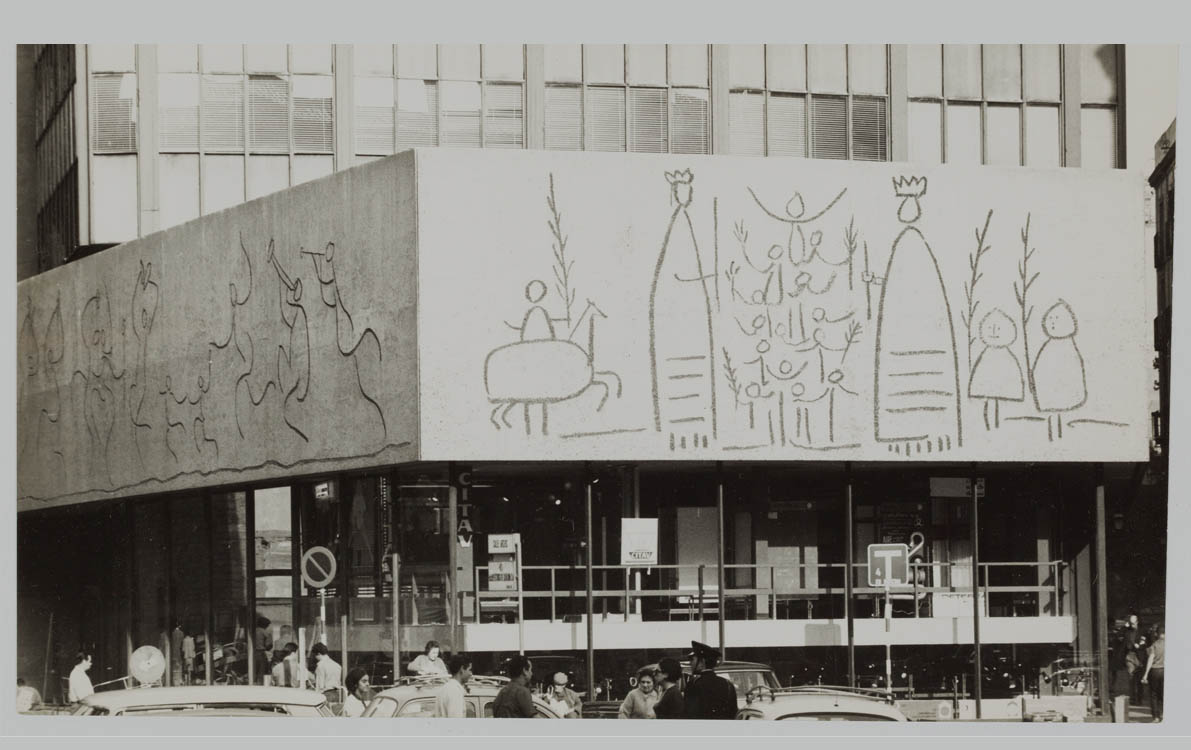
<!--/*--><![CDATA[/* ><!--*/ <!--/*--><![CDATA[/* ><!--*/ /* Estil per a mòbils (per defecte) */ .imatge-auto-ajustable { width: 50% !important; height: auto !important; } /* Estil per a escriptori (pantalles de més de 768px) */ @media (min-width: 768px) { .imatge-auto-ajustable { width: 35% !important; /* Torna al marge 0 original que tenies */ } } /*--><!]]]]><![CDATA[>*/ /*--><!]]>*/ This exhibition explores the relationship between Picasso's work and modern architecture. On the one hand, it highlights Picasso's contribution to the construction of contemporary space; on the other, it explores the determining influence of his work on the development of modern architecture. Through cubism, Picasso revolutionised the representation of space, incorporating new dimensions of perception based on geometry, science and abstraction. With a new spatial and plastic language, he incorporated techniques such as collage, fragmentation, superposition, montage, translation and transparency. This new set of tools not only transformed pictorial art but also influenced architecture and provided a new framework for thinking and designing spaces. Even though Picasso never built any architectural works, his relationship with the discipline is meaningful. He collaborated with different architects on several occasions to create works conceived for specific spaces. In this exhibition, we will present cases such as Guernica, painted for the Spanish Pavilion at the 1937 International Exhibition in Paris, and the 1962 friezes of the building of the School of Architects in Barcelona. In both cases, the same question arises, despite the differences in time and nature: whether the synthesis between painting and architecture is, in fact, possible. Among the great masters of modern architecture, Le Corbusier is the most influenced by Picasso. The shift from traditional painting techniques towards science and mechanisation spurred a renewal in architectural design and introduced universal symbols inspired by Picasso's world. The exhibition is organised into six sections that guide visitors through the exhibition: 'The Architect', 'Urban Visions', 'The Interior', 'Cages of Space', 'A Synthesis of the Arts?' and 'Picasso and Le Corbusier', offering a fresh perspective on the dialogue between painting and architecture throughout the 20th century.   As part of:

Nov 20, 2026 – Mar 7, 2027Details
All exhibitions on the museum's website
Contact
Email
museupicasso@bcn.cat
Improve this page

Nearby museums

Museu Tèxtil i d'Indumentària
20 m
Museu Barbier-Mueller d'Art Precolombí
30 m
Museu de la Xocolata
220 m
Museum of the History of Barcelona
300 m
Museu Frederic Marès
360 m
Hash Marihuana & Hemp Museum
490 m